FLOOD, EARTHQUAKE, STORM, FIRE, POWER OUTAGE
Are you prepared?
If not, protect your family or yourself for under $160.00
Chef’s Banquet All-purpose Readiness Kit 1 Month Food Storage Supply (330 Servings)


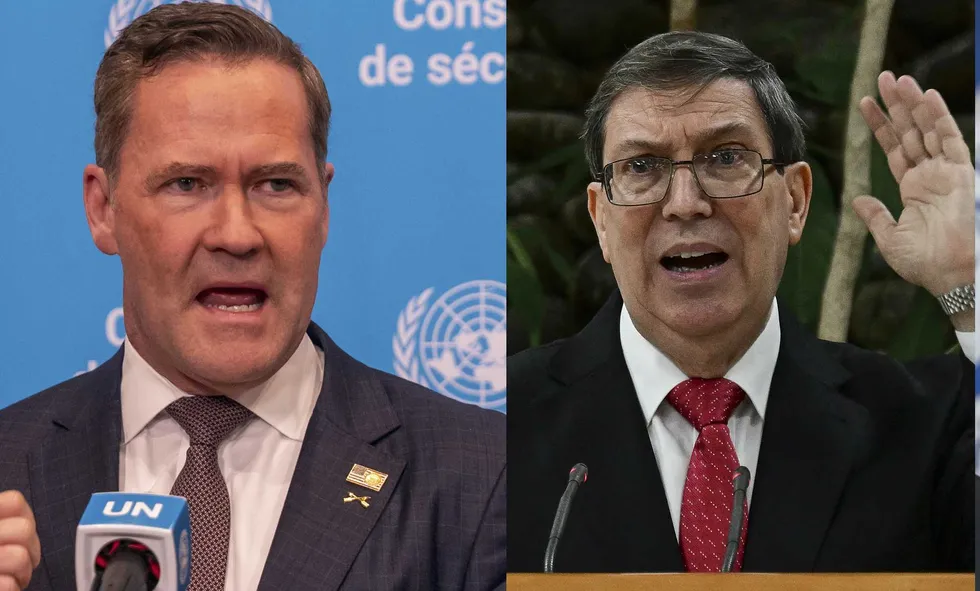
- US ambassador shouts down Cuban officials trying to hijack UN speech: 'Back away! This isn't Havana!'
 by Carlos Garcia on October 28, 2026 at 12:00 am
A delegation of Cuban officials interrupted a speech by U.S. Ambassador to the U.N. Mike Waltz, which led to a heated shouting match.Waltz was defending the U.S. embargo against the communist regime on the island nation when the Cuban delegation began pounding on their desks.'Back up, ambassador! Back away! This isn't Havana! You're not going to intimidate me. Do you understand who you're dealing with?'Foreign Minister Bruno Rodriguez called for a point of order from the U.N. presiding official before he furiously walked toward the podium where Waltz was speaking."You are a liar!" he yelled."Imagine what happens when someone asks these questions in Havana, not in a room full of ambassadors and cameras. Imagine what happens to those people if this is the intimidation and disruption that we see," Waltz said.Rodriguez continued to yell."Your excellency, I know you don't like to hear this. This is America, my friend!" Waltz chided. "This is the United Nations. This isn't your communist dictatorship!"Rodriguez continued to yell."You cannot silence me, and you cannot silence my colleagues!" Waltz added.The presiding official promised to allow Rodriguez to speak, but he continued to yell and interrupt."This individual needs to back away from this podium! He's not going to intimidate me," Waltz said."Back up, ambassador! Back away! This isn't Havana! You're not going to intimidate me. Do you understand who you're dealing with?" Waltz yelled.At this point, the presiding officer suspended the meeting."This is America. Back up!" Waltz yelled back.Cuba has been suffering from a crippling embargo that has tightened under the Trump administration. The United Nations has voted against the U.S. embargo for decades, though the motion is largely symbolic. RELATED: Woke 'Squad' member appears to confess to undermining Trump embargo on Cuba Rodriguez accused Waltz of lying grossly and offending the dignity of the people of Cuba.Secretary of State Marco Rubio may have heightened tensions with Cuba after he posted a message Friday many took as a provocation against the communist regime. "To those who seek to create positive change in Cuba — now is the time," he wrote on social media. "The disappointment of failed promises, corruption, and the privileged lives of only a few; seize this opportunity to create the change you desire through a discrete partnership with the CIA." Like Blaze News? Bypass the censors, sign up for our newsletters, and get stories like this direct to your inbox. Sign up here!
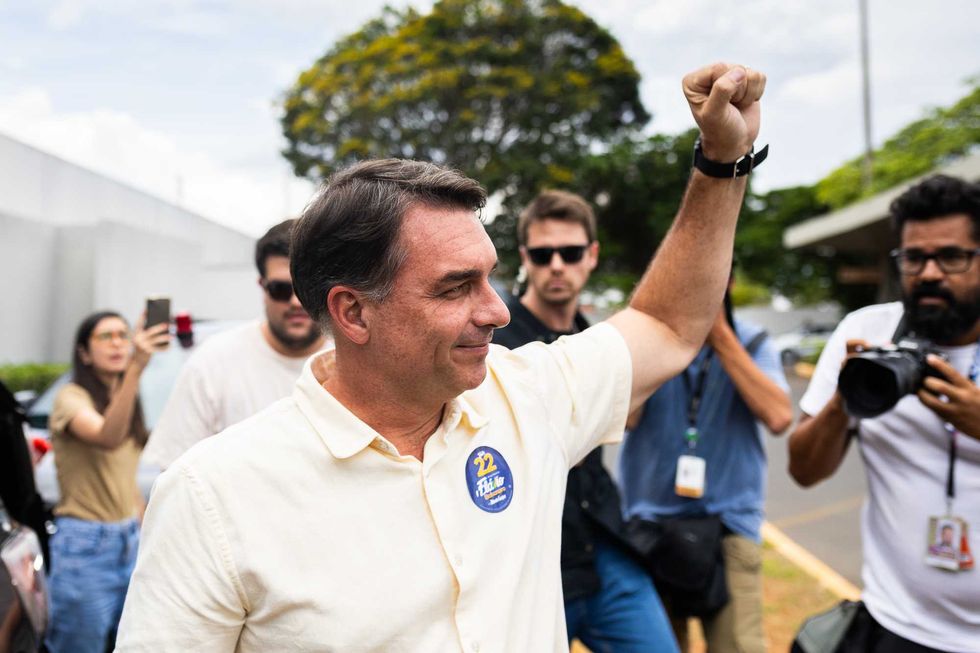
- Where in the world is Flávio Bolsonaro?
 by Benjamin Roberts on October 27, 2026 at 11:28 pm
Flávio Bolsonaro has reportedly fled to the United States after narrowly losing Brazil's presidential election under unusual circumstances and after Brazil's left-wing government demanded he surrender his passports.Bolsonaro, son of convicted former President Jair Bolsonaro, has left Brazil for the U.S., two sources told CNN Tuesday. A U.S. official then seemingly confirmed the report, telling the outlet that Bolsonaro was headed for Florida before stating that his destination was unclear, CNN said.'Do not recognize these elections.'Reuters, citing three sources, reported that he had left Brazil for the U.S. One source even said that the Trump administration had granted asylum to Bolsonaro and his immediate family, the outlet reported."After months of intense work that has been unfairly thwarted, I am not in the mood to speak to the press," said Paulo Figueiredo, an unofficial family spokesman.Bolsonaro lost Sunday's runoff to President Luiz Inácio Lula da Silva by about 3.6 points after Supreme Court Justice Cristiano Zanin extended voting by two hours, stirring fraud suspicions. Zanin was Lula's personal defense lawyer until Lula put him on the court in 2023.Lula was previously found guilty of corruption and money-laundering charges. He spent over 550 days in prison before he was freed in 2019. The Supreme Court annulled his convictions in 2021 on jurisdictional grounds. The elder Bolsonaro is serving a 27-year sentence under house arrest for what some claim was a political hit job. Flávio Bolsonaro also faces allegations of money laundering and other crimes."It is impossible to accept the result of the elections under these conditions," Flávio Bolsonaro said Sunday night, vowing to seek annulment. RELATED: Feds arrest 6 alleged fraudsters in Maine health care scandal Mark Wilson/Getty Images "Do not recognize these elections," Eduardo Bolsonaro, Flávio's brother, said in an X video. On Tuesday, Eduardo called reports that his brother had absconded a "lie," CNN reported.Justice Alexandre de Moraes signed a sealed order the night of the presidential election demanding that Bolsonaro surrender his passports. The order also prohibited Bolsonaro from leaving Brazil. Federal Police canceled the passports Tuesday amid reports that Bolsonaro had fled the country, according to CNN.Argentina's Infobae reported that Bolsonaro crossed into the Misiones province to take a private jet, though this report remains unconfirmed. Argentina said it has "no record" of him entering.“The process is confidential. We do not have any information,” Brazil's Supreme Court told Blaze News when asked about Moraes' passport confiscation order.The State Department and U.S. Customs and Border Protection did not respond to Blaze News' requests for comment.Like Blaze News? Bypass the censors, sign up for our newsletters, and get stories like this direct to your inbox. Sign up here!
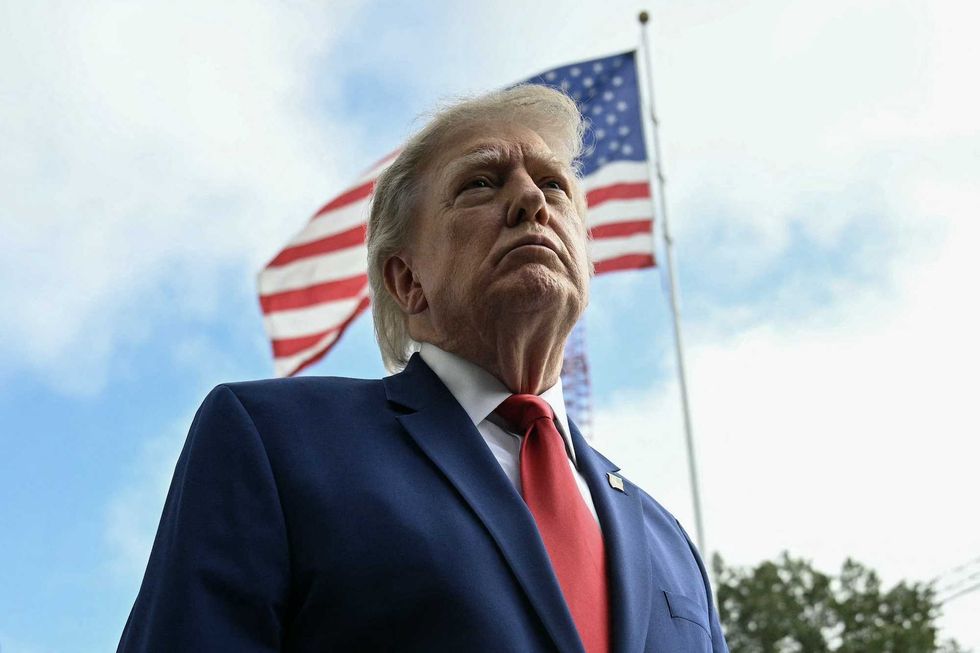
- Trump offers massive reward for tips on voter fraud
 by Carlos Garcia on October 27, 2026 at 11:15 pm
The president said anyone who reported voter fraud would be eligible for a million-dollar reward if it led to an arrest and conviction.President Donald Trump announced the award on his Truth Social account on Monday, just days before the pivotal midterm election day.'Only I can make this promise to you.' "Anybody reporting Voter Fraud in the past Elections, or the upcoming 2026 Midterm Election, will be paid $1,000,000 upon the arrest and conviction of those that created the Fraud!" he wrote."Thank you for your attention to this matter," he added.It's unclear what the source of the award money would be.The Trump administration is currently in a legal feud with California officials over a list of people identified as likely "noncitizen" voters registered to vote.On Monday, the Ninth Circuit Court of Appeals refused an emergency request from the Department of Justice to force California to segregate mail-in ballots from those on the list.In September, the president also promised to hand out $5,000 checks as a kind of dividend if Republicans won both the U.S. House of Representatives and the U.S. Senate in the midterm elections."Very much like a successful company will do a cash distribution to its shareholders," he explained."Because we've done so well and because our country is making so much money, that only I can make this promise to you," he added.RELATED: Pollster Frank Luntz CRUSHES Democrats' hopes over favorable polling Most pundits believe the Republicans will lose control of the House and maybe even lose the Senate as well, though some say that polling may not be capturing an accurate measure of voter sentiment. The president has long maintained that he was cheated out of victory in the 2020 election by voter fraud. Generic Congressional Ballot polls 2026: Democrats vs. Republicans pollwatch.theblaze.com Like Blaze News? Bypass the censors, sign up for our newsletters, and get stories like this direct to your inbox. Sign up here!
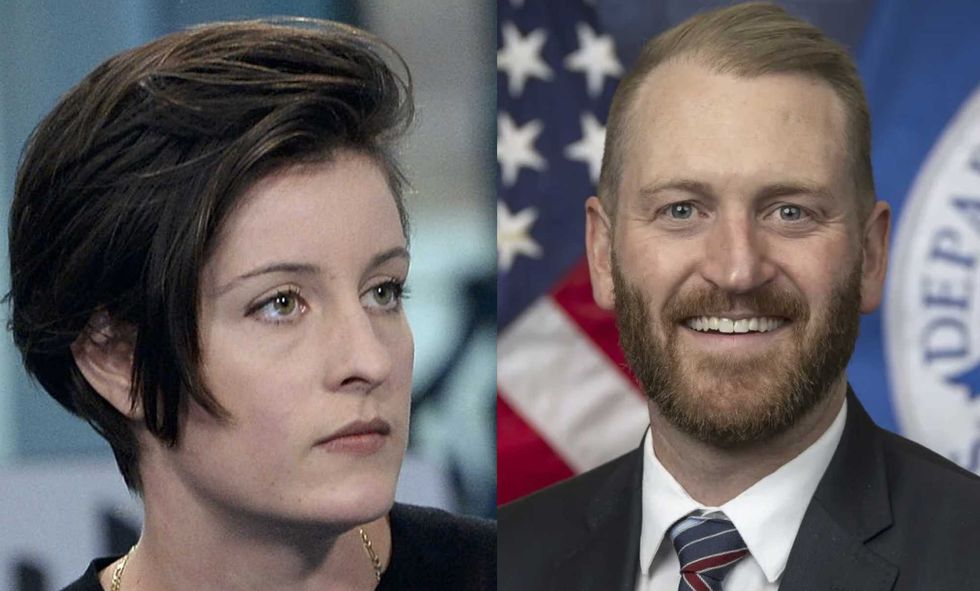
- DHS attorney DEMOLISHES '60 Minutes' reporter over 'law-abiding' illegal aliens narrative in full interview
 by Carlos Garcia on October 27, 2026 at 10:50 pm
The Department of Homeland Security has released the full video of an interview "60 Minutes" conducted with DHS general counsel James Percival.The "60 Minutes" segment Sunday with reporter Gianna Toboni documented the plight of an illegal alien who had been deported to Ghana and claimed to have been sent to war-torn Mali, where he ended up homeless and hiding out of fear for his safety.'I do really reject your characterization of someone who is in this country illegally and breaking our laws as quote, unquote, law-abiding.'While the report had a few short clips quoting Percival in defense of the deportation process, the full interview video, which the DHS shared on social media Monday night, showed him challenging Toboni's narrative overall."That's why I am going for the clarity here because I hear a lot about the violent offenders, point taken," Toboni said at one point, referring to deportees. "But what I don't hear about is the law-abiding folks, who, in our reporting, is more than half.""You're suggesting that people who are in this country illegally are law-abiding?" Percival replied."Let's say [they] don't have a criminal record outside of an immigration offense, maybe overstaying a tourist visa," Toboni responded."If you are in this country illegally, it is virtually impossible for you to live in this country and not commit additional legal violations — working without authorization, identity theft. There’s a lot of illegality that goes on when you are breaking the law," he replied."But I do really reject your characterization of someone who is in this country illegally and breaking our laws as quote, unquote, law-abiding. I think that's fundamentally inaccurate and unfair," Percival added."OK, fair enough," she accepted.The DHS posted a clip of that interaction to social media, where it quickly garnered hundreds of thousands of views.RELATED: ICE mocks deportation 'sob story' on '60 Minutes' — and dismantles its narrative with one inconvenient detail Percival pointed out in an X post Tuesday that the "60 Minutes" report shared a brief video from his interview where he admitted that he didn't know offhand what percentage of third-country removals involved illegal aliens convicted of violent crimes.In the extended clip, he goes on to explain at length why third-country removals are necessary in difficult cases. "What I can say is, there's a very specific reason why this population is disproportionately criminal. Well, it's really two reasons," Percival said."Number one, when countries refuse to accept their nationals back, they disproportionately do that for violent criminals. People don't really want to take their violent criminals back," he explained."Point two is, people will sometimes get what's called withholding of removal, that type of relief, because they are statutorily ineligible for asylum. And what creates that ineligibility in many cases is significant criminal conduct," he continued.He said that prior to the Trump administration, many of these violent criminals would reoffend because prior administrations were not enforcing immigration laws. "60 Minutes" posted a video of the full interview with Percival on YouTube on Monday.Like Blaze News? Bypass the censors, sign up for our newsletters, and get stories like this direct to your inbox. Sign up here!
- Feed has no items.